

Ask any seasoned collector what the most critical part of their hobby is, and they’ll tell you it’s not the chase, the trade, or the big pull. It’s preservation. For every single, valuable piece of cardboard that enters your collection, the long-term goal is simple: maximize its value.
In the world of sports cards, value is fundamentally tied to condition. A pristine $50 card can jump to $500 as a PSA 10, but a single corner ding or surface scratch — often preventable — will shatter that potential.
This isn’t just about putting a card in a plastic shell; it’s about making a calculated investment in the longevity of your assets.
That being said, here is your definitive guide to securing the best sports card protection for long-term value.
Why Protection Is the Ultimate Investment in Your Sports Cards
Your collection is a physical portfolio, and like any investment, it must be shielded from risk. The small cost of premium protection now can save you thousands in future resale value.
The “Enemy” of Card Value: Condition (Grading Standards)
The card industry speaks in grades. A Gem Mint (PSA 10) card commands a massive premium because it is flawless. Every single piece of dust, every minuscule impression, and every soft corner is a deduction, dropping the card to a PSA 9, 8, or worse. Your protection strategy must be flawless because the graders’ standards certainly are.
Understanding Environmental Threats (UV, Humidity, Dust)
These are the silent killers of cardboard. Cards are paper and ink, making them highly susceptible to:
- UV Light: Causes color fading, especially in vintage or brightly colored cards.
- Humidity: Leads to warping, moisture damage, and the dreaded mold.
- Dust & Debris: Creates surface scratches upon insertion or removal, or from movement within a loose case.
The Cost of Neglect: How Damage Tanks Resale Price
Simply put, a card is worth whatever the market will pay for its current condition. Allowing an unprotected card to receive a surface scratch can instantly chop 50% or more off its potential graded value. Quality protection is the insurance policy every serious collector needs.
Tier 1: Essential Basics for Every Card
Every single card you pull that you intend to keep—regardless of value—deserves at least this baseline protection.
Penny Sleeves (Soft Sleeves): The First Line of Defense
A soft, acid-free polypropylene sleeve, affectionately known as the “penny sleeve,” is non-negotiable. Its sole purpose is to provide a clean, smooth, non-abrasive barrier that prevents the card’s surface from rubbing against the inside of any hard plastic holder. Never place a bare card directly into a Toploader or One-Touch.
Proper Handling Techniques to Prevent Surface Damage
A card’s value is most vulnerable between the pack and the sleeve. Always handle cards by the edges, preferably while wearing cotton or microfibre gloves. Your fingerprints and skin oils (acidic) are a long-term contaminant that can show up under grading lights.
Tier 2: The Gold Standard for Mid-to-High Value Cards
Once a card’s value exceeds a few dollars, or if you plan to hold it long-term, it needs rigid support to prevent bending and creasing.
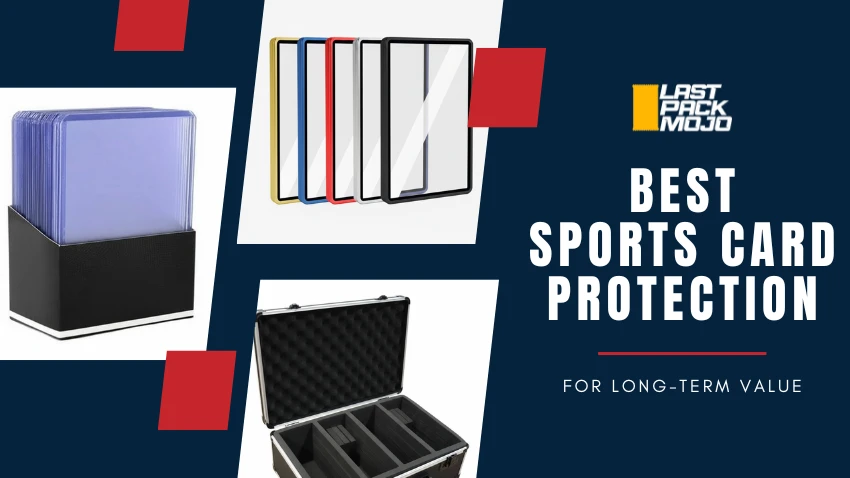
Toploaders: Rigid Protection for Storage and Display
The Toploader is the workhorse of the hobby. This semi-rigid plastic case provides superior structural integrity. Paired with a penny sleeve (always!), it offers excellent protection against minor impacts and bending.
Choosing the Correct Point (PT) Size
Cards come in different thicknesses, measured in “points” (PT). Using the wrong size is a critical error:
- Too Loose: The card shifts and can scratch inside.
- Too Tight: You risk damaging the edges or corners forcing it in.
Always match the holder size to the card thickness (35pt for standard modern cards, 55pt+ for thick patch/relics).
Semi-Rigid Holders (Card Savers): The Grading Submission Choice
Card Savers are thinner, more flexible plastic sleeves. While not as great for long-term display, they are the required choice for most major grading companies (like PSA) because the thin plastic allows their teams to easily remove the card for inspection. If you’re submitting, this is your choice.
The “Double-Bagging” Method: Toploaders in Team Bags
For the ultimate seal at this level, place the sleeved card into a Toploader, then seal the entire Toploader into a self-sealing plastic “Team Bag.” This effectively creates an airtight, dust-free barrier around the entire rigid holder, significantly enhancing preservation.
Tier 3: Premium Protection for Graded and Investment Cards
When you’re protecting a five-figure card, you demand the absolute best in security and presentation.
One-Touch Magnetic Holders: The High-End Display Solution
The One-Touch is a sleek, two-piece acrylic case held together by powerful magnets. They offer superior protection and a professional aesthetic, making them ideal for displaying your crown jewels.
Do Magnetic Holders Offer UV Protection?
Many modern One-Touch holders are advertised as containing UV-resistant additives. While they significantly reduce fading compared to a bare card, no case is 100% UV-proof. Always store them out of direct sunlight.
Acrylic and Display Cases: Securing Your Graded Slabs
For already-graded cards (slabs), protection shifts to preventing case damage. Acrylic display cases are essential for high-value graded cards to prevent the slab itself from getting scuffed, scratched, or cracked during display or storage.
Tier 4: Maximum Security for Graded Slabs and Bulk Storage
When you’re dealing with the truly elite cards—the ones that are already slabbed and represent serious capital—protection moves from preserving the card to preserving the case and ensuring secure, long-term organization.
Rubber Slab Bumper
A simple, high-density rubber frame that slips around the edges of a graded card holder (PSA, BGS, SGC). This is critical for impact protection, preventing the slab corners from chipping or cracking if dropped or bumped during transport. Think of it as airbag protection for your most valuable assets.
Aluminum Graded Card Case
For serious collectors, these lockable, padded cases are the only way to store high-value slabs. They offer superior protection against physical impact, light, and dust, and often include a lock for security. A magnetic holder for graded cards takes this a step further for single-card display security.
Toploader Storage Box
If you have hundreds of cards in Toploaders, don’t leave them scattered. The rigid cardboard or plastic storage box keeps the Toploaders upright, preventing them from bending or warping. This provides essential organizational integrity for your mid-tier investments.
Beyond the Holder: Long-Term Storage and Environment
The holder is just half the battle. Your storage environment determines the long-term success of your preservation efforts.
Temperature and Humidity Control (The Basement/Attic Warning)
NEVER store high-value cards in a basement, attic, or garage. These areas are prone to extreme temperature swings and high humidity, which can warp cards and promote mold. Aim for a stable, cool, and dry environment — the same conditions ideal for fine art.
Light Exposure: Why UV Light Is a Card Killer
Even ambient light from a window or a powerful desk lamp contains UV radiation. Over time, this light will cause colors to fade. Keep your display pieces away from direct light sources and ensure your storage area is dark and climate-controlled.
Our Recommended Protection Setup for Maximum ROI
Maximizing long-term value is about matching the card’s worth with its protection level.
Checklist: What Protection to Use at Every Price Point
| Card Value | Recommended Protection Strategy |
| Less than $20 | Penny Sleeve 🡆 9-Pocket Binder Page |
| $20 to $250 | Penny Sleeve 🡆 Toploader 🡆 Team Bag |
| $250 to $1,000 | Penny Sleeve 🡆 One-Touch Magnetic Holder |
| $1,000+ | Penny Sleeve 🡆 One-Touch 🡆 Stored in Climate-Controlled Safe or Dedicated Display Case |
Sports Card Protection FAQs
Are Penny Sleeves and Toploaders Enough?
Yes, for 90% of your collection, this combination is the perfect balance of security, visibility, and cost-effectiveness for long-term storage.
How Often Should I Check My Stored Cards?
If they are stored correctly (cool, dry, dark), you only need to check them once or twice a year. Excessive handling increases the risk of damage.
Is PVC Bad for Sports Cards?
Absolutely. Polyvinyl Chloride (PVC) releases harmful gases over time that can stick to and damage the surface of your cards, including green discoloration. Always ensure your sleeves and holders are made from acid-free polypropylene. Check the packaging before you buy!
Wrapping Up: Your Card Protection Playbook
If you want to play the long game in the card market, forget the flashy pulls for a second and understand this simple truth: preservation is your only leverage. Every tip in this guide—from the non-negotiable penny sleeve to the rigid security of a One-Touch—is a calculated investment designed to beat the grading scale. You saw the enemies: UV light, humidity, and simple dust, all ready to drop your potential PSA 10 to a devastating 9 or 8.
The takeaway is clear: stop treating your collection like a stack of cardboard and start treating it like a portfolio of assets. Match the card’s value with its protection, skip the PVC, keep it cool and dark, and understand that the small cost of a quality holder today is the insurance policy that secures a massive ROI tomorrow. Protect your assets, period.